SiriusOne:
VR Experience for Interactive Walkthrough of an Architecture Project
Immersive VR walkthrough allowing stakeholders to explore architectural projects in real scale before constructionClient & Project Overview
Business Problem
The client needed:
- A guided navigation experience to showcase key areas
- The ability for users to switch to self-guided exploration
- Real-world material visualization (Grohe, Dyson, Sanipex, Corian, Venesta, Nakashi)
- Fast delivery within 1 week
"Our goal was to make the walkthrough feel effortless - so that anyone could step inside the project and instantly understand the space. We built every interaction with precision, from navigation logic to spatial audio, ensuring that design intent becomes a real experience, not just an image."

Artyom Anikeev
CTO, SiriusOne
Tech Stack
Game engine: Unity
Rendering pipeline: URP
Target device: Meta Quest 3
#VR/AR
#Architecture
#Immersive Experience
Project Timeline

Duration
~7 days
Effort
~120 hours
Integration & Setup
Days 1–2
Importing renders, implementing voice-over scripts, and designing UI for guided navigation.
Logic & Testing
Days 3–5
Building teleportation logic, navigation between floors, and user interaction testing for smooth experience flow.
Optimization & Delivery
Day 6
Performance refinement, build optimization, and preparing final APK for Meta Quest 3.
Deployment & Training
Day 7
Device configuration, on-site training for client teams, and demo session walkthrough.
Team involved

Unity Developer
Built the full VR architecture, navigation logic, and controller interactions.

3D Generalist
Prepared optimized 3D assets, lighting, and 8K panoramic renders for immersive visuals.

UI/UX Designer
Designed spatial interfaces, user flow, and interaction points for intuitive in-headset experience.
Solution Overview
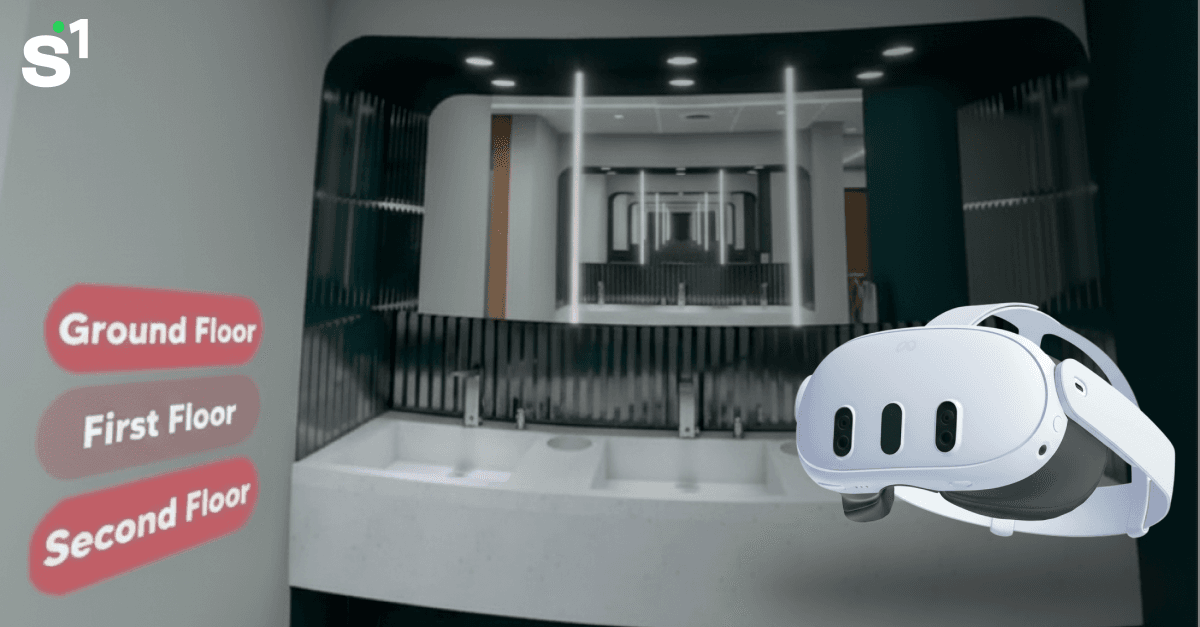
SiriusOne developed a single-player VR walkthrough with two navigation modes — Guided Tour and Self-Tour — optimized for Meta Quest 3.
Experience Highlights:
15 points of interest with synchronized voice-over narration
Each key area of the project was turned into an interactive scene with dynamic storytelling. The synchronized voice-over guides users through the environment, creating a sense of narrative flow and emotional engagement instead of a static presentation.
Smooth teleportation and floor-to-floor navigation
Users can move seamlessly across multiple levels of the building using intuitive controller navigation. Transitions were optimized for natural motion and comfort, allowing stakeholders to explore real-scale spaces without disorientation.
Interactive material highlights and pop-up anchors
Every surface, texture, and fixture can be examined up close through interactive anchors. When selected, pop-ups display the real-world materials and specifications — turning design details into tangible, data-rich interactions.
Ambient spatial sound and restart logic for replay
The experience is enhanced with layered ambient audio and spatial cues that deepen immersion. A restart option allows users to replay the guided journey at any time, ensuring every presentation feels intentional and complete.
Results
Production-ready VR experience delivered in 7 days
The complete immersive walkthrough — including guided narration, interactive logic, optimization, and Meta Quest 3 deployment — was delivered in just one week. This allowed the client to demo the project to stakeholders without delaying approval timelines or design milestones.
50% faster design approval cycles
By enabling stakeholders to experience the space in real scale, the VR walkthrough eliminated ambiguity around layout, proportions, and material choices. As a result, feedback cycles shortened significantly, and key decisions were made faster with fewer revision rounds.
15 fully interactive points of interest
Each key zone of the architectural project was transformed into an interactive scene with voice-over narration, material references, and spatial context. This shifted presentations from passive viewing to active exploration, improving understanding and engagement across technical and non-technical audiences.
Higher confidence in material and spatial decisions
Real-world material visualization and accurate lighting behavior allowed the client to validate design intent before construction. This reduced the risk of late-stage changes, miscommunication with suppliers, and costly on-site corrections.

Similar
implemented cases: