AI SDLC – Turn AI Development Into a Reliable Engineering System
Your team already has the engineers and the AI tools. We install the operating model that turns AI experiments into reliable, production-grade delivery – agents do the work, your people stay in control.




Readiness Assessment
We measure where your SDLC actually is – across seven dimensions – and hand back a readiness scorecard, an opportunity heat-map ranked by ROI, and a 90-day roadmap. Two to three weeks, fixed scope. It starts with a free 90-minute portfolio review; the full assessment is the paid first tier.
Pilot
We install the AI SDLC operating model on one team and one repo, proven on a live use case with measurement throughout – typically eight to twelve weeks. You come out with the framework running in your git, a trained team, and a measured cycle-time delta against your day-one baseline.
Scale Program
From one team to the whole engineering org, over six to twelve months: governance, training, runtime hooks at scale, and the incident-to-rule loop turned into a permanent operating model. The endpoint: the framework runs without us.
Why Engineering Teams Bring Us In
Clarity Before Code
Most stalled work does not lack engineering capability – it lacks delivery structure. We install spec-first discipline, documented decisions, and quality gates before agents touch the code. The moving target becomes a shippable deliverable.
Agents Execute, Humans Decide
Claude Code and similar agentic tools serve as the execution layer, configured around your engineering standards. Agents do the repetitive execution; your engineers stay in the loop on every decision. The result is more throughput without growing headcount – typically only 0–20% of tasks fully delegated, never more without a human gate.
Every Incident Becomes a Permanent Rule
When something breaks during delivery, we turn it into a written rule the agents enforce automatically on every change. The same mistake cannot ship twice. Your delivery system gets safer with every commit – and that hardened framework stays a permanent company asset.
Knowledge Transfer Is the Deliverable
This is co-delivery, not outsourcing. We work alongside your engineers, and the framework, agent configuration, specs, and architecture decisions all stay in your repository. The next engineer onboards by reading the folder – not by booking a call.
How AI SDLC Works
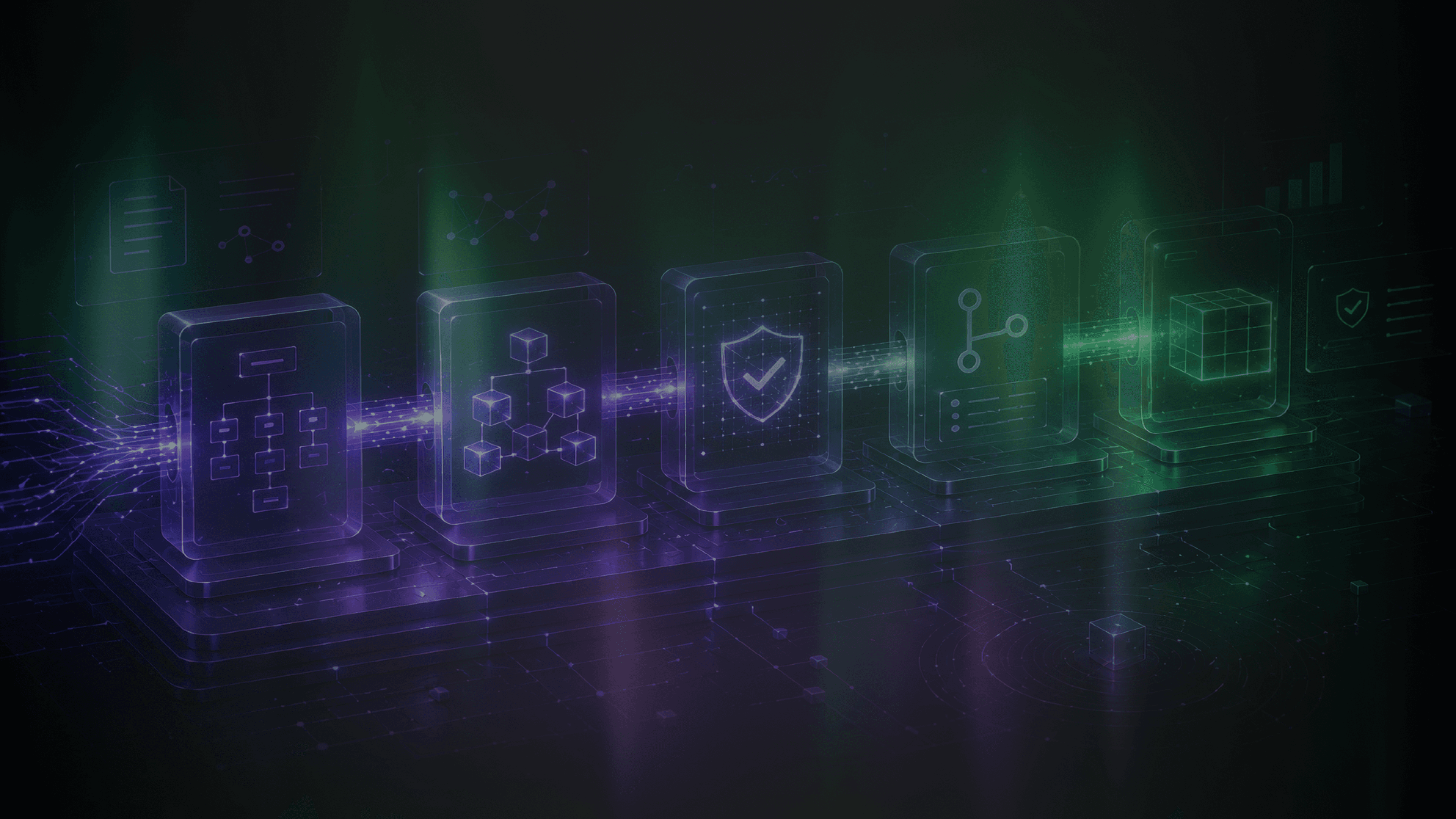
Define → Build → Verify → Ship → Learn
01
Define – Architecture & Specification
We install the project constitution (CLAUDE.md) and lock the spec – scope, non-goals, decisions – so the AI agents have rules before they write anything. Baseline metrics are captured here. This is where stalled work finally gets clarity.
02
Build – Plan & Execute
AI agents run the first real delivery loop: work broken into single-task units, one commit per task, spec- and TDD-driven. Your engineers direct and verify – they orchestrate the agents, not type more code.
03
Verify – Tests Against Real Data
Nothing the agents produce merges on trust. Tests run against real data, behaviour is verified, and a human gate signs off. The verification gate is enforced, not optional – this is what keeps AI output from shipping as slop.
04
Ship – Clean, Auditable Trail
Every agent-made change ships through a reviewed merge with a clean git trail – traceable end to end: what was decided, why, and who signed off.
05
Learn – Incident to Rule
Each incident becomes a permanent rule the agents enforce going forward. The operating model gets safer with every loop – continuous improvement built into how the agents work, not bolted on after.
The Agentic Stack We Set Up
We configure the agentic delivery stack inside your environment – the same one we run on our own production work – and leave it owned and documented in your repo.
Adopted AI Tools, But Delivery Didn't Get Faster?
If your team has the engineers and the AI tools but delivery still stalls, the gap is the operating model – that is exactly what we install. Start with a free 90-minute portfolio review, numbers first.
Where AI SDLC Fits Best
Built for engineering teams maintaining production systems where a mistake is expensive and the work has to be auditable.





Frequently Asked Questions
Both – it is co-delivery. We embed our AI-SDLC practice directly into your team, ship real production work alongside your engineers, and leave the framework, agent configuration, and institutional memory in your repository. You get the deliverable and the capability to keep doing it.
No. Agents handle repetitive, single-task execution against a written spec – your engineers stay in the loop on every decision. Typically only 0–20% of tasks are fully delegated, always with a human gate. The goal is faster delivery with more control, not fewer people.
Everything. The agentic framework, project-specific rules, agent skills, specs, architecture decisions, and a rule set derived from real incidents – all shipped in your repository. The next engineer onboards by reading the folder.
Observed ranges run 4–10× cycle-time compression on suitable work, with ~60% of daily developer tasks AI-assisted. On a recent data warehouse engagement, a pipeline estimated at 4–8 weeks shipped in 2 weeks. These are observed, not promised – we commit to a specific ROI band per use case during the Readiness Assessment.
It starts free: a 90-minute Readiness Read on one repository, no commitment. From there the engagement has three tiers – Readiness Assessment (2–3 weeks, a measured baseline and roadmap), Pilot (8–12 weeks, one team installs the framework on a real feature), and Scale (6–12 months, org-wide rollout). Pricing is fixed-price per phase or capped time-and-materials, every line tied to a delivery metric.
Want to See It on Your Codebase?