SiriusOne:
Web Application Penetration Test for a Fintech Platform
Manual-first penetration testing for a fintech landing page — validating real-world exploitability and strengthening security posture.Client & Project Overview
Business Problem
- WordPress misconfigurations
- Plugin & theme vulnerabilities
- Endpoint/API exposure
- Input validation flaws
- Authentication weaknesses
- Cloud/infrastructure risks
"Our goal was to bring clarity, predictability, and precision into the validation process. Even a simple landing page can introduce real risk — our job is to ensure it never becomes one."

Eugene Kulchitski
CEO, SiriusOne
Tech Stack
Cloud: Apache / Nginx hosting environment
Platform: WordPress CMS (themes, plugins, REST API)
Security Tools: Burp Suite, OWASP ZAP, Intruder, Nikto, WPScan, Nmap
Dependency & SCA: WordPress scanners, plugin/theme fingerprinting scripts
Frameworks: OWASP Top 10:2025, PTES, SANS Top 25, CVSS v4
#Cybersecurity
#Penetration Testing
#Fintech
Project Timeline

Duration
1–2 weeks
Effort
25 hours + 5-hour retest bank
Discovery & Research
Day 1
External footprinting, CMS fingerprinting, plugin/theme enumeration, server configuration review.
Design & Prototyping
Day 2
Threat modeling, OWASP Top 10 mapping, WordPress-specific test design, WAF bypass plan.
Development
Days 3–4
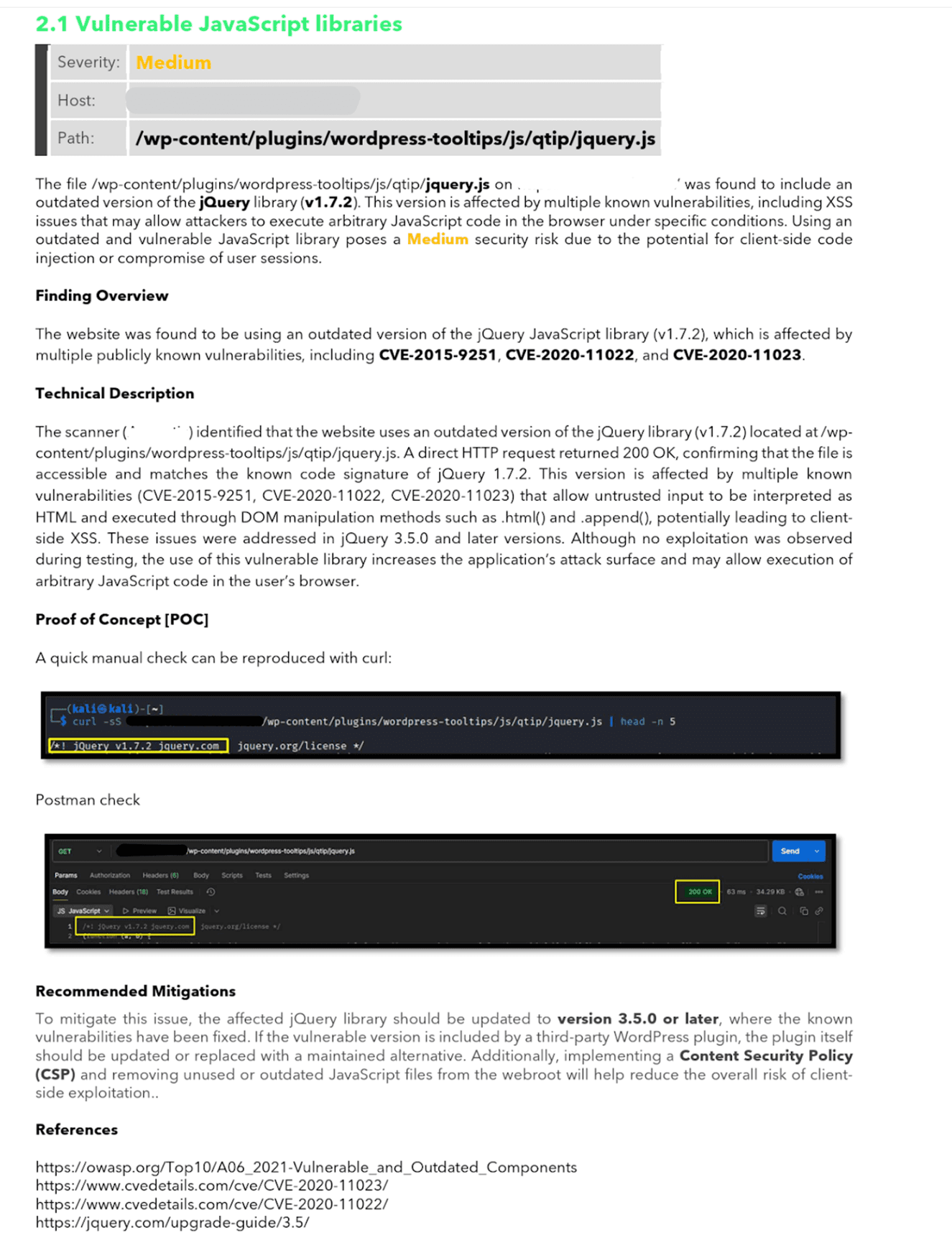
Manual exploitation of injection vectors, auth testing, REST API validation, WPScan CVE checks, TLS/header review.
Testing & Security Audit
Day 5
Risk validation, dependency checks, misconfiguration verification, CVSS v4 scoring, evidence collection.
Deployment & Training
+2-week retest window
Delivery of technical report, business impact mapping, remediation workshop, and verification of fixes.
Team involved

Penetration Tester
Manual exploitation, OWASP/PTES aligned testing.

Cybersecurity Analyst
WordPress CMS audit, CVSS scoring, evidence preparation.

Delivery Lead
Scope management, communication, report delivery.
Solution Overview
External Web & API Testing
OWASP Top 10 manual testing, input validation flaws, auth bypass attempts, session management review.
WordPress Vulnerability Review
Plugin/theme enumeration, known CVEs, XML-RPC checks, file-upload risks, REST API exposure.
Infrastructure & Configuration Audit
Server header analysis, TLS validation, DNS review, caching/redirect evaluation, hosting misconfiguration checks.
WAF Evasion Validation
Bypass attempts, false-negative testing, rule-set robustness evaluation.
Unified Reporting & Verified Retest
CVSS scoring, PoC evidence, prioritized remediation plan, retest confirmation of resolved issues.
Results
Full Visibility Across the Attack Surface
Critical and high-severity vulnerabilities discovered and documented.
WordPress Deployment Fully Hardened
Configuration fixes applied, insecure components removed, unnecessary endpoints disabled.
Security Strengthened Prior to Exploitation
TLS, header security, and CMS configuration improvements.
100% of Critical Vulnerabilities Resolved
All major issues were validated as fixed during the retest.

Similar
implemented cases: